


My Vision is Improving with Age
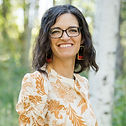
Guest Blog post by Jamie Truppi, author of Clean Food, Messy Life. Check out more on Jamie’s blog here!

I set out before dark to drive the one hour and 30 minutes south to my eye doctor in the nearest city. He is not the ophthalmologist who saved my vision five years ago from a retinal detachment with injections of bubbles followed by staples that made me profane in front of the interns. He’s not the optometrist who, eight years ago, diagnosed my eye ulcer or the doctor who treated me for my first eye ulcer during my reckless twenties. Yet I appreciated this one as much as the others.
Every October, I haul my camper to the fairgrounds for winter storage, visit the eye doctor, then carefully drive to Costco with dilated eyes beneath my prescription sunglasses. There, I order new lenses before shopping for the yoga retreat I co-organize and at which I cook for twenty-something yogis.
Every year, the same routine. Every year I consider how my nourishment plays a role in my eye health.
During the most recent visit, I was surprised to learn my vision had improved.
Until eight years ago, my vision progressively worsened.
I stopped wearing contacts.
Eight years ago, during a cold November, we were finally installing heated floors in our master bathroom. We’d been living with exposed particleboard subfloor for two years after deciding the bathroom carpet had to go. My eyes—red and itchy—streamed tears constantly for days. We’d saved enough money for the floor, but I couldn’t justify spending money on my eyes.
I was working on my board certification and starting a business, yet my freelance writing didn’t pay enough for an eye appointment, new glasses, and new contact lenses. I wore my contact lenses a year longer than recommend. I assumed particles from the remodel must have lodged beneath my lenses.
I’d been through a similar experience perhaps a decade prior. My first eye ulcer resulted from dust, wind, weed and an accidental afternoon nap at a Phish concert—with my contacts in my eyes. Oops. It was a painful experience, with quick wound healing that risked scarring and long-term damage. Thankfully, my doc was an out-of-the-box thinker and guided me to healthy eyes.
This time, there was no pain. When I finally took myself to the optometrist, he told me that an eye ulcer fries the nerves, hence no pain the second time. No wonder. In addition to the second eye ulcer, he was concerned about a potential autoimmune disease in my retina, for which he suggested medication as treatment.
“Do I risk worsening my eyes without the medication?” I asked.
“That depends,” he replied.
I asked him if I could alter my diet. Knowing the nature of my work, he agreed, and we set a follow-up appointment for four weeks later.
He also told me, “No more contacts, Jamie, and no eye makeup, either. In fact, think about not wearing mascara again.”
A month later, my eyes had cleared up completely.
“What did you do?” my optometrist asked, somewhat surprised.
“You said I had severe inflammation, so I ate an anti-inflammatory diet.” It was relatively easy, in fact, because my diet already consisted of what people call “anti-inflammatory” foods. I did not follow an autoimmune dietary protocol, though I looked it up—it was too restrictive while cooking for a family, and I wondered whether it was necessary. First, I wanted to know whether subtle adjustments to my whole-food meals helped.
Something worked. Perhaps a combination of an intentional diet and following the doctor’s orders—only glasses, no mascara.
I haven’t worn contacts since and, over the years, my vision has continued to improve. Both astigmatisms have reduced significantly. My prescription improved and remained relatively stable—until the next eye episode.
A retinal detachment. Apparently, it’s common with nearsightedness and…ahem…age.
Five years ago, during the pandemic, I’d become concerned about “dark floaters,” which were constant and began to multiply, even before the ayahuasca journey. Having vowed to always have my eyes looked at immediately, I made an appointment to see my optometrist at Costco optical center on Saturday, only six days away.
But that Thursday, I attended an ayahuasca journey—it was post-divorce and I had some emotional healing to do. As the ceremony neared, the dark spots in my eye changed into some kind of veil or sheer “curtain.”
As you can imagine, an entire night of purging worsened my condition. The inexplicably dark and uncomfortable plant medicine experience seemed to point me toward a new perspective, both philosophically and physically. By the following morning, Friday, the “curtain” had moved further over my retina, covering roughly two-thirds of my eye. I was in a post-journey fog, and I was worried.
I scooped up my 9-year-old from friends and managed to get through the night with him, a Harry Potter flick, and great discomfort in both my psyche and my eye.
The next morning, we drove an hour and 30 minutes south to my eye doctor in the nearest city. As I sat in Costco with my son, my optometrist said, “There is nothing more important for me to do today than find someone to perform surgery on your eye. It needs immediate attention.”
Uh, oh. It was that bad.
The doc called Idaho’s only retina specialist not affiliated with a hospital. He happened to be on call that day. And, in town. And, on his way to Costco.
“I’ll be there in ten minutes,” the retina specialist said.
He arrived right on time, briefly looked into my eye and agreed with my optometrist. “Meet me at my office in ten minutes. We need to take care of this today.”
My son looked at me with tears in his own eyes. “Mom, you said you’d take me miniature golfing.”
I looked up at the retina specialist. “Can I take Avery mini golfing first?” I asked.
“Sure, I’ll do my Costco shopping and meet you in an hour.”
He gave me his office address. I decided shopping was not important—we had plenty of snacks plus the lunch I packed, as always. My kiddo was my priority, plus I needed time to take deep breaths, process this emergency, and find gratitude for these serendipitous events.
I also needed to find entertainment for my son while I was in some kind of surgery.
On the last hole, Avery got a hole in one. Free game—for next time. I promptly drove us to Target, one of my least-favorite places to patronize, to buy a Dogman book for Avery.
Soon I was reclining in a chair with the ophthalmologist bent over me—no mask and no assistant—enduring intense needle pain. The numbing drops didn’t work, but that didn’t stop the doctor from injecting a dozen pokes into my eye to inject a hundred tiny bubbles beneath the peeled-back retina. And that wasn’t even surgery—it was pre-op to keep the detachment from worsening. The surgery, which would staple my retina back to my eyeball, was scheduled for Monday morning.
And it was more painful than natural childbirth.
In the following weeks, months and years, I continued following my eye doctors’ orders: No contact lenses and no mascara. There were no dietary suggestions, yet no need for prescriptions, either. My eyes healed well—completely, in fact, which apparently is not always the outcome.
My vision had stabilized to the point at which I didn’t have to purchase new lenses after each appointment, which meant I got to use my finances for more pressing needs like, obviously, high-quality food.
Then, last week, the ophthalmologist ran all the tests—puffs of air, rotations of different lenses, bright lights, and tiny letters on the eye chart—until he found the prescription that gave me 20/20 vision. My vision had improved from the previous year.
My eyes clearly are not perfect.
“The problem is perfectionism,” the doctor said. “We Americans seek perfection. When a 40-something American comes in, she wants to have perfect vision. Europeans don’t see the world that way.”
As a recovering perfectionist with eye issues, I can understand the typical American’s desire.
“Any other eye concerns?”
“Besides nearsightedness?” I replied. Then I demonstrated how often I removed my glasses to read tiny print, like food and supplement labels.
“Are you ready for bifocals?” the doctor asked me.
No way. I’m not old yet.
He left the room and his assistant administered drops into my eyes. As I waited for my eyes to dilate, I focused on work to-dos.
I texted one of my favorite farmers about buying fresh beets, arugula and herbs for the retreat.
I texted the director of our local food bank about where to meet later that week to pull carrots for the community—and for the retreat.
I replied to the beekeeper, who tested positive that morning for influenza A and cancelled our afternoon podcast interview.
When the doctor returned, my phone was only a few inches from my face. My vision was blurry and surely I looked like a teen screen addict. I apologized while finishing my text.
“Trying to squeeze in some work while I wait,” I said.
“What do you do for a living?” he asked.
“Well, the job that pays the bills is what some call functional nutrition.” I paused, ever curious about how people respond to my work. Nutrition means something different to everyone.
The doctor rolled his chair toward the lens machine and asked, “So, what’s the best yogurt?”
“Not Chobani.” We all laughed. Chobani’s headquarters were only a few miles from the office.
Was that judgmental? Had I invoked shame? There are so many things I could say about the dairy industry.
“That smell…” I went on, “as I got out of my car in the parking lot. It’s overwhelming.”
The doctor and his assistant nodded. We all knew the source of that smell: the cows from the dairy CAFOs that completely surround Twin Falls.
I described how challenging it is to answer a question like, “What’s the best any kind of food,” because both food and humans are complicated. Some people eat yogurt because they grew up eating yogurt. Some people omit dairy due to lactose intolerance or eczema. I’ve found that many people don’t give dairy a second thought—they certainly don’t think about sourcing or quality.
“We are what we eat eats,” I said. I felt compelled to elaborate. “And dairy is a particularly challenging topic. Still, I always suggest eating organic dairy, unless you know the milk comes from cows raised on uncontaminated pasture.”
Dairy, after all, was the catalyst for my interest in the connection between food, nutrition, humans and nature.
“Also, ‘best’ does not always mean ‘perfect’. Even small, idyllic farms face big obstacles.”
During the remainder of my check-up, we discussed organic food, the dairy industry in Idaho, and Americans’ commonly narrow view of food and nutrition coupled with a desire for “the perfect diet.”
I moved on to Costco, grateful to eat my lunch mindfully in my car in the parking lot now that I had no interview and extra time. I drank the small smoothie I brought with me and ate a piece of leftover homemade pizza with local, organic pork, homemade pesto and my sourdough crust. I piled ten or twelve leaves of freshly picked arugula on top.
This is why my eyes are better, I thought.
It may be “the perfect meal,” but it was real food. Uncontaminated. Ingredients I could trace to their sources.
And there I was at a big box store, about to purchase foods from faraway places, packaged in plastic, grown in ways I didn’t understand.
Still, I was doing my best. The food for the yoga retreat would be the best I could procure. Some produce, beans and bread would come from farmers I knew well or friends with big gardens. The eggs were from the chickens at the elementary school (the retreat was a benefit for this school). The rest would come from one of five grocery stores where I could find the lowest prices.
Nourished and with my dilated eyes improving, I took a few deep breaths before walking into Costco toward the restroom. I passed a line of people waiting for their $1.99 slices of pizza and 60-ounce sodas for $0.89 each. Their carts were full of gluten-free crackers, croissants, protein bars, Halloween candy and a variety of ready-to-heat-and-eat meals.
This was our American food culture: affordable and easy, in super-sized containers, not whole or wholesome. Eating well in America seems so difficult. And temptations are almost impossible to avoid, like the food samples at Costco.
“Looks like I’m here on sample day again,” I said to a woman cutting pieces of breaded chicken with rubber-gloved hands.
“Oh, we offer samples every day,” she replied.
I set off down the wide aisle with my empty cart and shopping list. I felt well-nourished from my parking lot lunch and grateful to have had the foresight to eat before entering the eternal abyss of temptations.
Follow Jamie on Substack.
The information provided on Nielsen Nutrition is for general informational purposes only. It is not intended to be a substitute for professional advice, diagnosis, or treatment. Always seek the advice of your physician or other qualified health provider with any questions you may have regarding a medical condition. This post may contain affiliate links, which means that we may earn a commission if you make a purchase through these links. This is at no additional cost to you and helps to support the maintenance and growth of the blog.


Comments